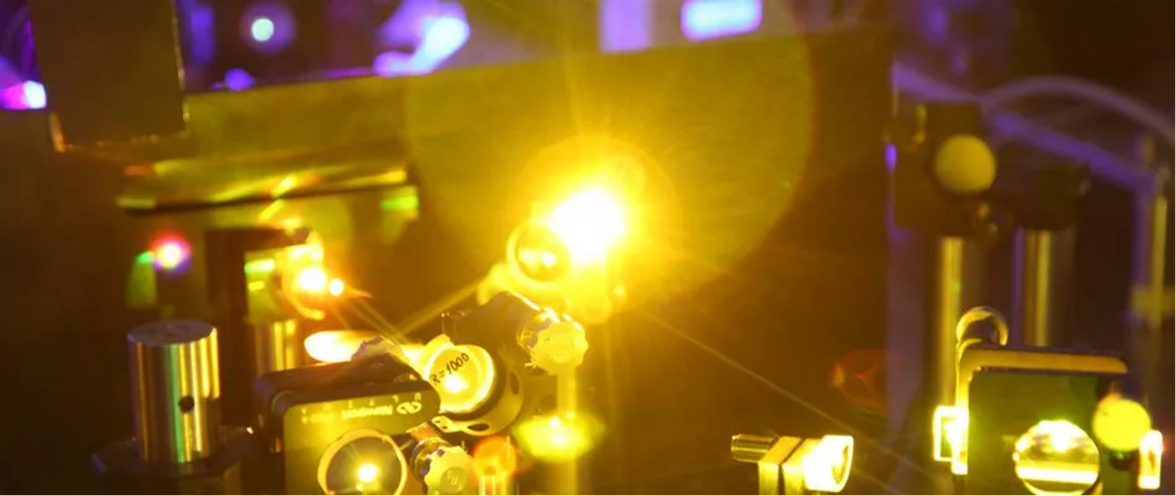
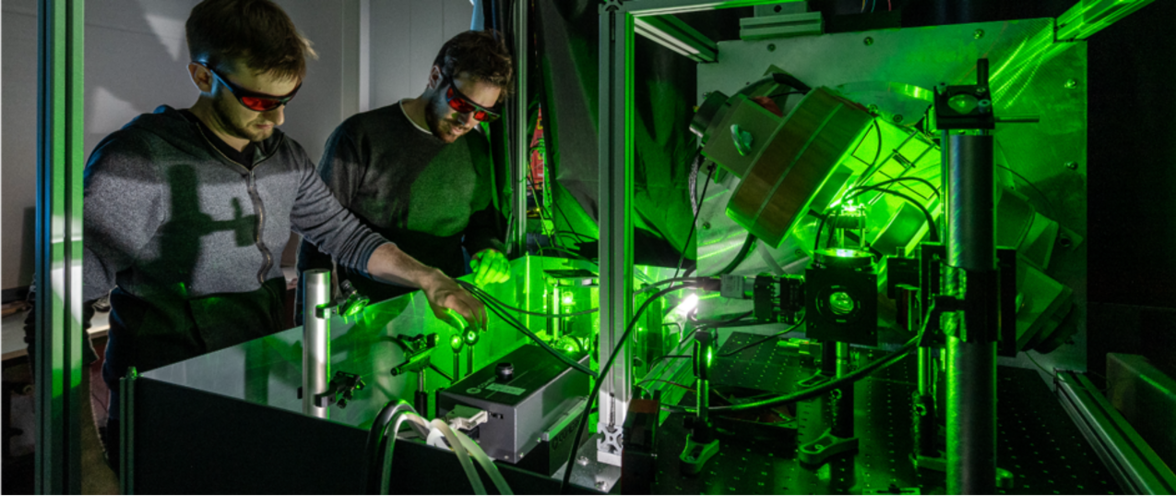
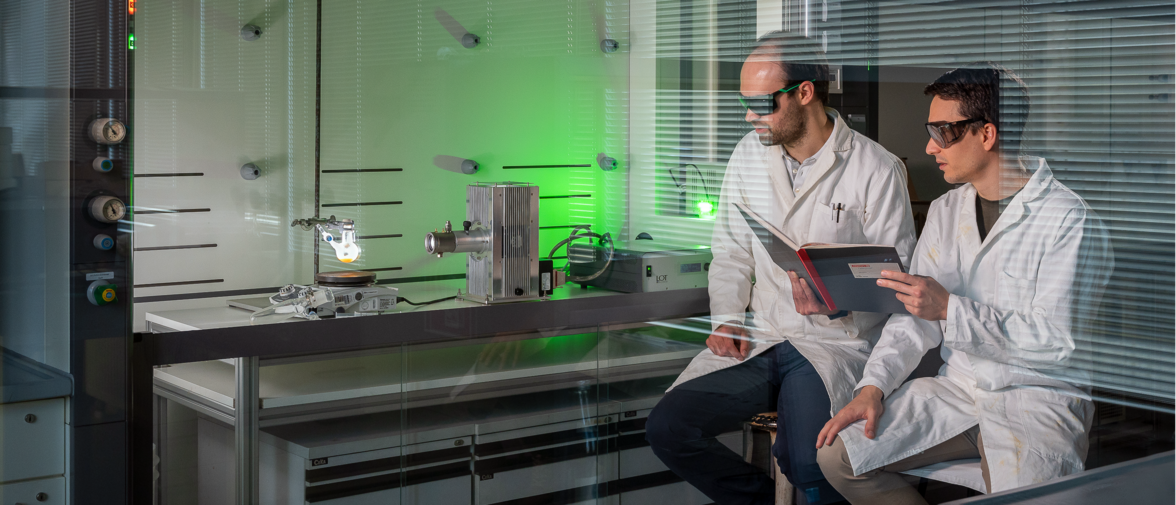
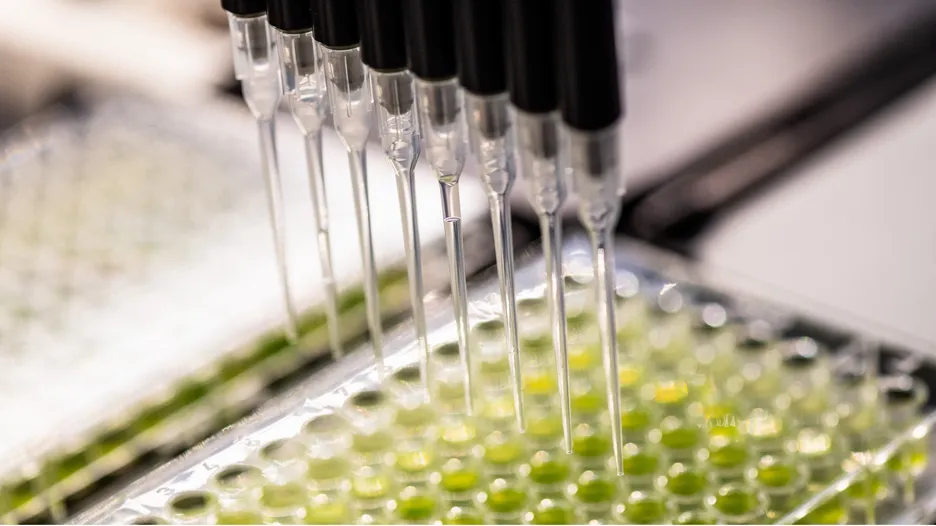
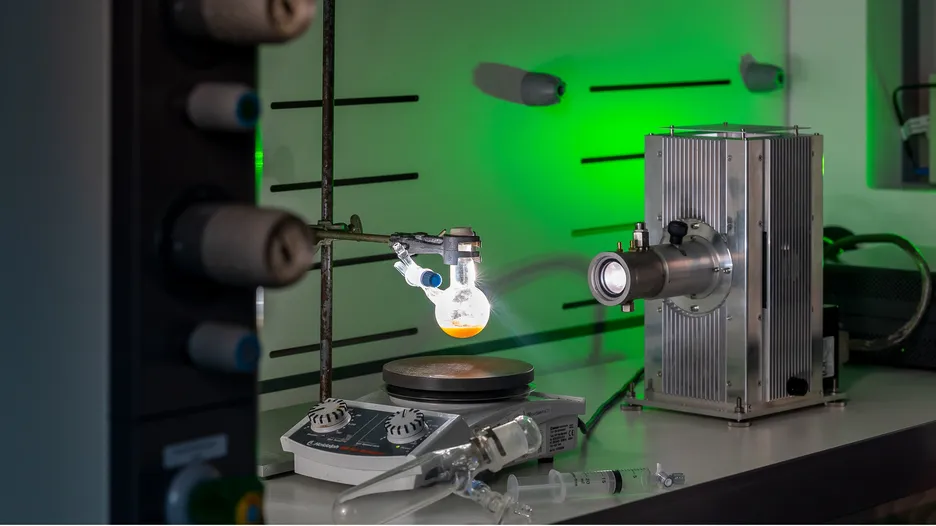
Research on Conversion of CO2 at Technical University Munich 2020. Image: Andreas Heddergott / TUM
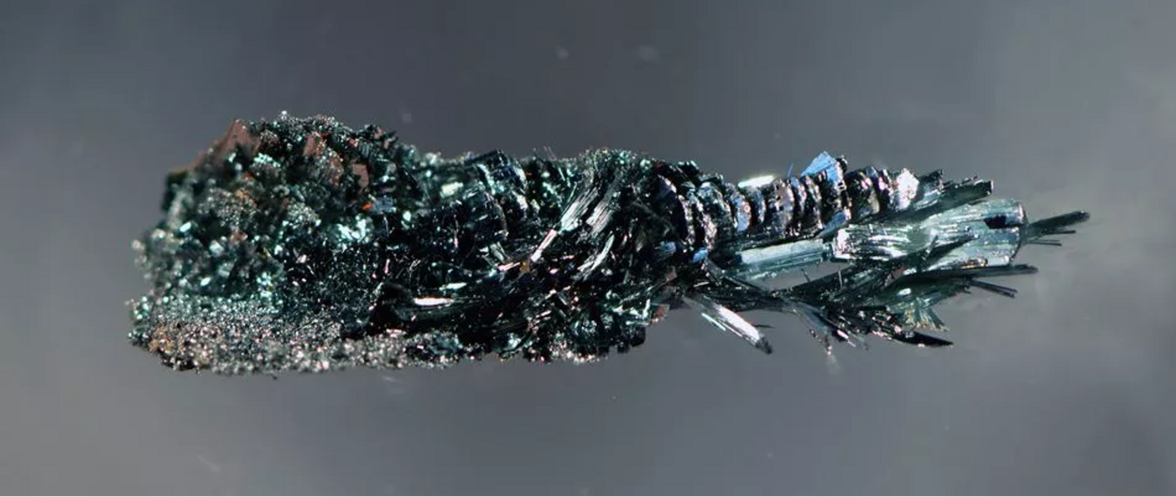
Black arsenic-phosphorus: semiconducting material with a 2D structure similar to that of graphene produced in the research group of Prof. Tom Nilges. Image: Andreas Battenberg / TUM
Prof. Dominik Bucher uses defects in diamond (NV-centers) as quantum sensors for NMR spectroscopy on the nano- to microscale. Image: Andreas Heddergott / TUM
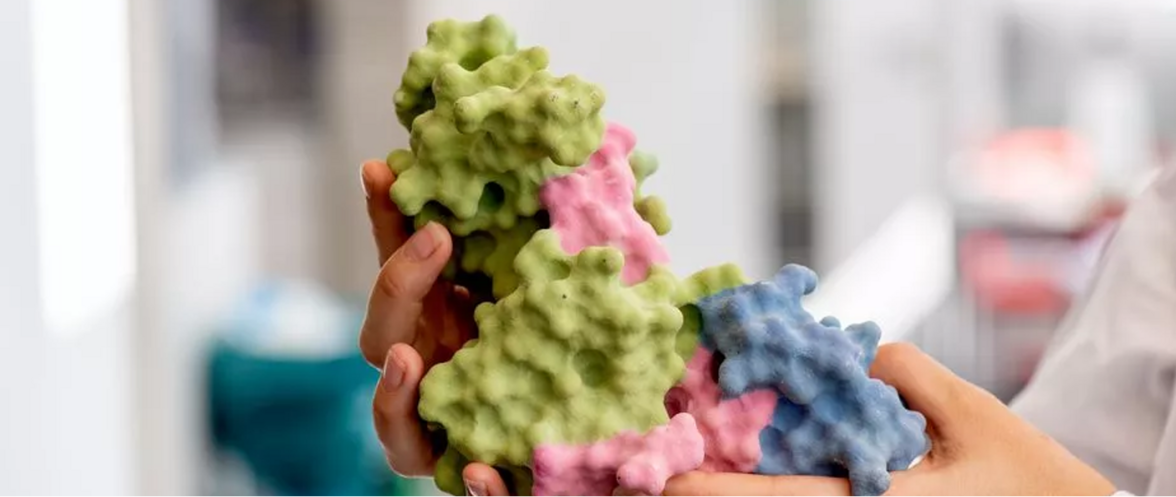
Research on multifunctional supramolecular materials for energy storage and conversion at Image: Astrid Eckert / TUM
Slide 1 of 7
Our Research
Our research areas can be divided according to two key aspects: “Chemistry and Energy” and “Chemistry of Sustainability”. Through our research, we try to address the most challenging issues of society’s present and near future. The associated research institutes on our campus also play an active role in our endeavour.
Chemistry and Energy
To satisfy society’s enormous energy demand, new concepts must be developed to store and harness energy in chemical bonds. Our Department of Chemistry addresses a wide range of feedstocks, synthetic fuels and storage systems. Research spans the investigation of microscopic chemical processes, the production of novel materials, and technology development.
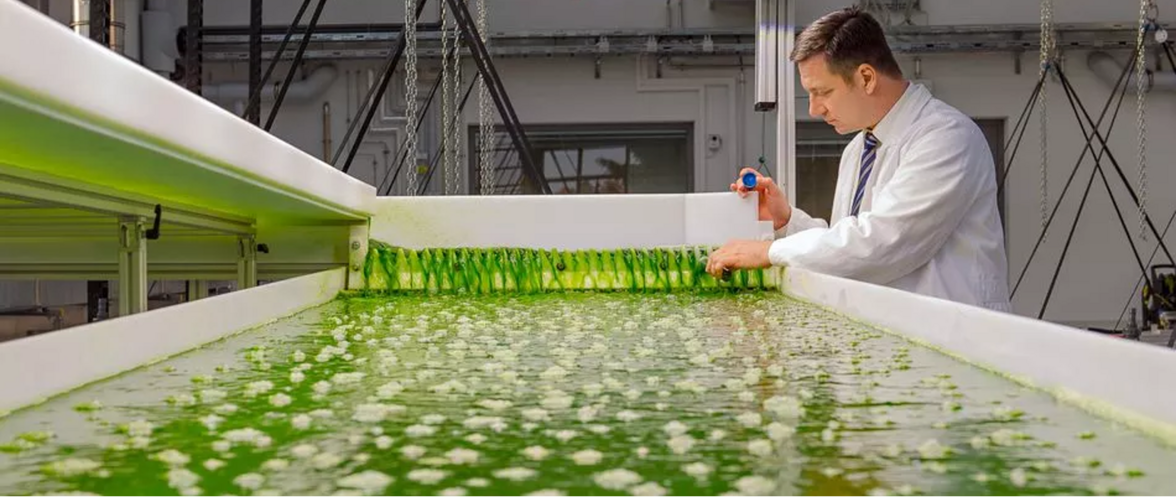
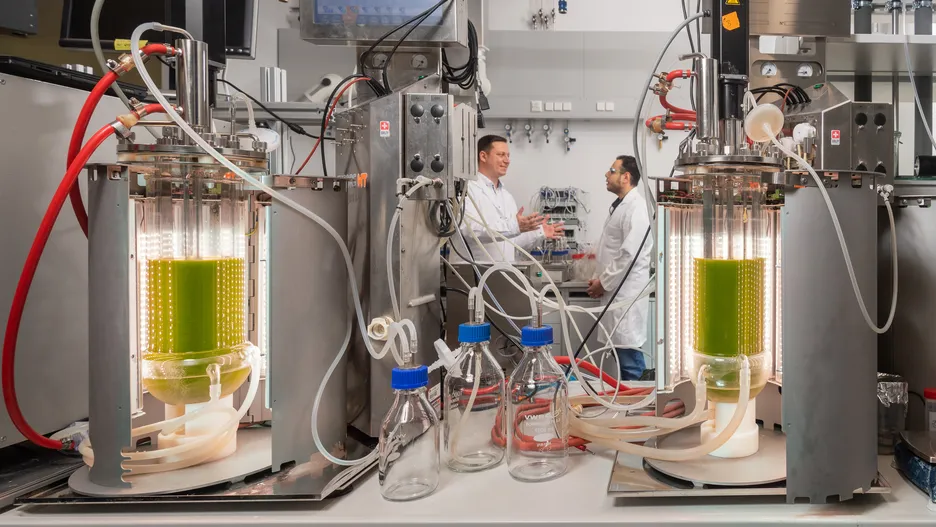
In the Green Carbon Project, TUM biotechnologist Prof. Dr. Thomas Brück, from the Werner Siemens Chair of Synthetic Biotechnology, together with partner companies, explores how raw materials for carbon fiber components can be sustainably produced from algae and yeasts. Image: Andreas Heddergott / TUM
En route to a fully renewable material cycle, diversified feedstocks beyond oil must be tapped. This requires the development of efficient chemical conversion processes for feedstocks like shale gas as a bridge technology. Beyond these fossil resources, biomass acts as an alternative for the production of energy carriers. The development of renewable biogenic intermediates links research in the field of energy and sustainability.
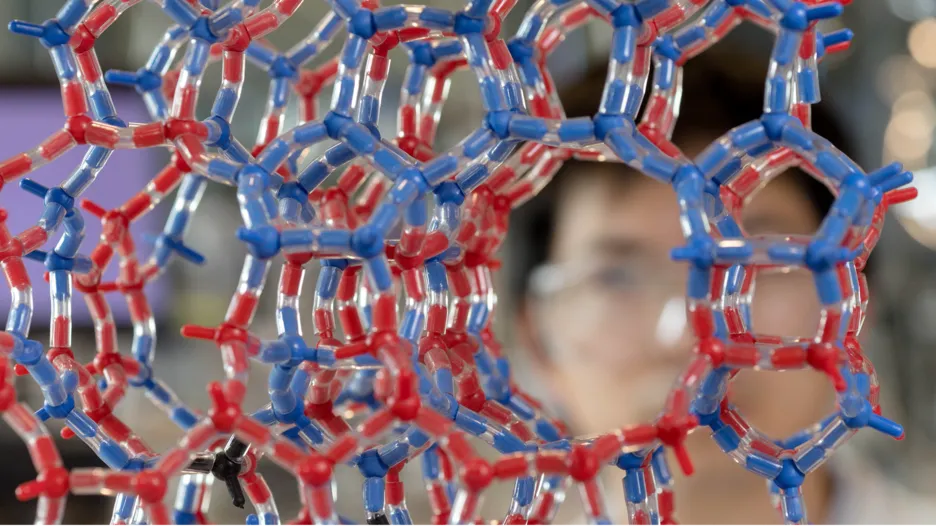
View into the cavities of the catalyst. Image: Andreas Heddergott / TUM
The conversion of abundant water and carbon dioxide offers the potential for large scale production of synthetic fuels. Targets include hydrogenand hydrocarbons like methanol. Novel solutions for gas separation and storage are integral to the associated technologies.
Research on multifunctional supramolecular materials for energy storage and conversion at TUM. Image: Astrid Eckert / TUM
Sustainably generated electricity necessitates the development of efficient chemical systems for the storage and release of energy on demand. Routes comprise electrolyzers and fuel cells, batteries and thermoelectric materials.
Our planet Earth is energetically an open system but strictly closed in the availability of matter. Within these constraints, the chemistry of the future must respond to the needs of society. Thus, we need to meet the requirements imposed by limited resources while avoiding the emission of pollution to keep a balanced environment.
In the Green Carbon Project, TUM biotechnologist Prof. Dr. Thomas Brück, from the Werner Siemens Chair of Synthetic Biotechnology, together with partner companies, explores how raw materials for carbon fiber components can be sustainably produced from algae and yeasts. Image: Andreas Heddergott / TUM
Many current industrial processes are open chemical cycles as exemplified by CO2 emissions or inadequate resource disposal. Although chemistry can provide key solutions to close chemical cycles, this potential is far from being realized today. Research in the fields of carbon,nutrient and chemicals in water cycles is pursued to challenge this issue.
Sample holder with three single crystals, on whose surface the catalyst particles are deposited. Image: Andreas Heddergott / TUM
Contemporary chemical processes suffer from a lack of selectivity, generate undesired by-products and consume an excessive amount of energy. Catalysis is a key technology that addresses these challenges of process efficiency and also opens unprecedented routes to novel molecular structures. Key targets regarding process efficiency are: Low TemperatureTransformations, Selective Bond Activation and Dynamic Self-Organization.
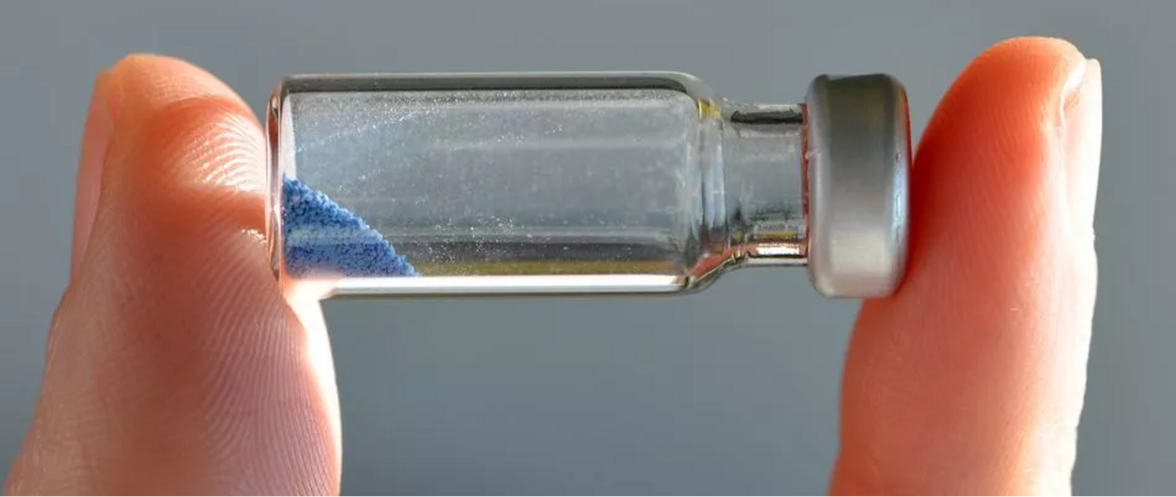
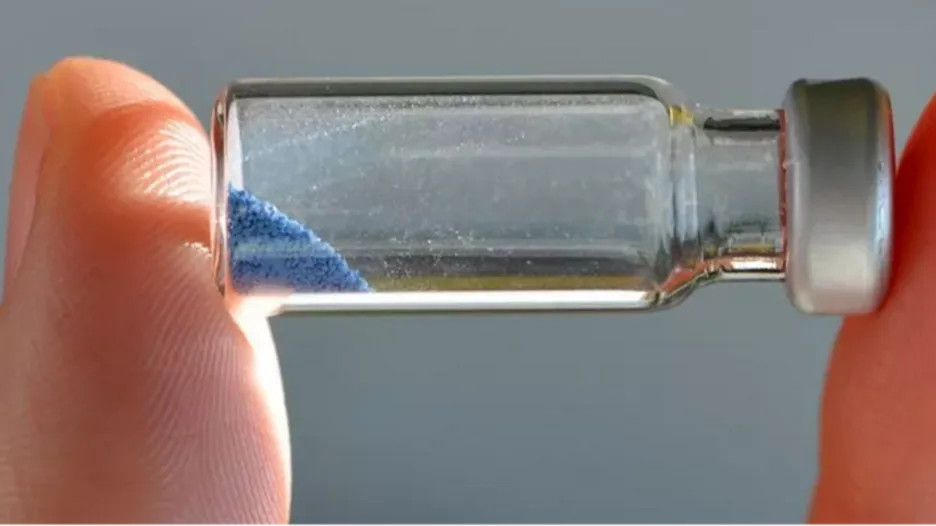
Efficient conversion of natural gas: Embedded copper gives the zeolite its blue color. Image: Andreas Battenberg / TUM
Despite limited availability, current society relies on excessive use of resources. This implies that existing processes need to be revised in terms of resource efficiency. Excess waste streams and limited availability of crucial resources force us to rethink the economy of chemical reactions to get to a zero waste chemistry. This includes the examinationof earth abundant materials and the use of light harvesting systems.
Abstract: The design of artificial photoenzymes by incorporating synthetic chromophores into proteins represents a promising strategy to achieve non-natural biocatalytic transformations with high levels of…
Boesen, Benedikt; Heider, Anna; O’Shea, Jack M. et al.
Abstract: Chromanes are frequently encountered as chiral structure elements in active pharmaceutical ingredients (APIs). We have now discovered an access to enantiopure chromanes, which employs a 1:1 mixture of…
Ghosh, Biki; Iglhaut, Maximilian; Babushkina, Daria et al.
Abstract: Upon catalysis (1 mol %) by a chiral cobalt porphyrin, quinazolinones with a tethered diazo alkane precursor underwent an enantioselective C–H alkylation at carbon atom C4. Formation of five-, six-,…
Buchelt, Christoph; Breitenlechner, Stefan; Zuber, Julian; Huber, Stefan M.; Bach, Thorsten
Abstract: The photocycloaddition of 1,1-dimethylallene to various aromatic carbonyl compounds was found to occur exclusively at the benzene core. While the reaction with methyl 2-methoxybenzoate resulted in a…
Abstract: A series of N,N-disubstituted buta-2,3-dienamides was prepared from 3-butynoic acid and probed as substrates in a light-induced photocyclization. It was found that xanthen-9-one (10 mol%) promotes the…
Hofer, Johannes; Bertrams, Maria Sophie; Kerzig, Christoph; Bach, Thorsten
Abstract: Intermetalloid clusters are considered as highly charged soluble models for intermetallic phases. While their bonding situation is not fully understood, their solubility makes them promising…
Fajman, C. E.; Dankert, D. M.; Coburger, P.; Klein, W.; Fässler, T. F.
Abstract: The chemical system Li/Ti/P has previously been subject to intensive investigation. However, reliable structural data for the reported phases have remained elusive. Motivated by the growing interest…
Müller, David; Kutsch, Tobias; Zeitz, Sabine et al.
Abstract: Solid electrolytes are a key feature of all-solid-state batteries, which represent advanced energy storage systems. The investigation of electrochemical properties of promising materials is essential…
Merk, Samuel; Meyer, Jan; Müller, David; Fässler, Thomas F.
Zeitschrift fur Anorganische und Allgemeine Chemie
Abstract: From a reaction of K4Ge9, GaCp*, and [18]crown-6 in ethylenediamine, the new compound [K([18]crown-6)]4[Ga2Ge18]·4en has been obtained, containing the novel [Ge9Ga–GaGe9]4− cluster anion. The compound…
Fischer, Christina; Kuznetsova, Yulia; Klein, Wilhelm; Fässler, Thomas F.
International Journal of Refractory Metals and Hard Materials
Abstract: The nucleation of various MoO2 starting materials was investigated on a laboratory scale during the second reduction step from MoO2 to Mo of the two-step reduction process from MoO3 to Mo. It was…
Rainer, S.; Willinger, M. G.; Willinger, E.; O'Sullivan, M.; Huppertz, H.