
Cultivation-independent Methods
Technologies and Methods
Quantitative Polymerase Chain Reaction (qPCR):
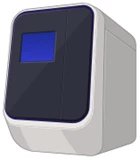
Quantitative polymerase chain reaction (qPCR) is a highly sensitive and precise technique used for the detection and quantification of nucleic acids in complex samples. Similar to conventional PCR, the method relies on repeated thermal cycling to exponentially amplify specific DNA or complementary DNA (cDNA) sequences. The key difference is that qPCR monitors the amplification process in real time by using fluorescent dyes or sequence-specific probes, which emit fluorescence proportional to the amount of amplified product formed during each cycle. This real-time measurement enables both qualitative detection and quantitative analysis by determining the initial copy number of target nucleic acids based on the fluorescence signal’s threshold cycle (Ct-value). qPCR can be applied to determine the concentration of bacteria and viruses and to validate results obtained from other enrichment and detection methods (Göpfert et al., 2023). In combination with PMA treatment this method provides accurate quantitative data for concentrations of bacteria which was shown for the analysis of viable Legionella spp. in evaporative cooling systems (Redwitz et al., 2024). For samples with a very complex matrix, such as process water and exhaust air from air purification systems in animal husbandry, we have shown that a standard addition method is better suited for quantitative analysis (Schwaiger et al., 2024).
Literature:
Göpfert, L.; Klüpfel, J.; Heinritz, C.; Elsner, M.; Seidel, M. Macroporous epoxy-based monoliths for rapid quantification of Pseudomonas aeruginosa by adsorption elution method optimized for qPCR. Analytical and Bioanalytical Chemistry, 2020, 412, 8185–8195. https://link.springer.com/article/10.1007/s00216-020-02956-3
Redwitz, J.; Streich, P.; Zamfir, M.; Walser-Reichenbach, S. M.; Seidel, M.; Herr, C. E. W.; Heinze, S.; Quartucci, C. Verification and application of qPCR and viability-qPCR for Legionella monitoring in evaporative cooling systems complementing the conventional culture method. Science of The Total Environment, 2024, 176011. doi.org/10.1016/j.scitotenv.2024.176011
Schwaiger, G.; Matt, M.; Streich, P.; Bromann, S.; Clauß, M.; Elsner, M.; Seidel, M. Standard addition method for rapid, cultivation-independent quantification of Legionella pneumophila cells by qPCR in biotrickling filters. Analyst, 2024, 149, 2978-2987.
doi.org/10.1039/D3AN02207B.
Flow Cytometry (FCM):

Flow cytometry (FCM) is used for rapid and quantitative analysis of individual particles or cells in a fluid stream based on their optical and fluorescent properties. As each particle passes individually through a focused laser beam, scattered light and emitted fluorescence are recorded, providing detailed information on cell size, granularity, and physiological state. Fluorescent dyes can be used to differentiate between live and dead cells, detect specific cellular components or identify cells through fluorescently labeled antibodies or oligonucleotide probes. In comparison to traditional cultivation-based techniques for bacterial monitoring, FCM enables rapid characterization and counting of total and viable bacterial cells, even for species that are difficult or impossible to culture. We could show that total cell counting and intact cell counting by FCM is a as rapid, cultivation-independent, and untargeted methods for effect-based analysis of biocide effectiveness. Legionenella pneumophila were rapidly quantified in process water of evaporative cooling systems (Streich et al., 2024) or bioaerosols (Heining et al., 2023).
Literature:
Streich, P.; Redwitz, J.; Walser-Reichenbach, S.; Herr, C.E.W.; Elsner, M.; Seidel, M. Culture-independent quantification of Legionella pneumophila in evaporative cooling systems using immunomagnetic separation coupled with flow cytometry. Applied Microbiology, 2024, 4, 284-296. doi.org/10.3390/applmicrobiol4010019.
Heining, L.; Welp, L.; Hugo, A; Elsner, M.; Seidel, M. Immunomagnetic separation coupled with flow cytometry for the analysis of Legionella pneumophila in aerosols. Analytical Bioanalytical Chemistry, 2023, 1-11, https://doi.org/10.1007/s00216-023-04738-z.
Liang Y.; Heining L.; Elsner M.; Seidel, M. Flow cytometry for rapid analysis of bacteriostatic versus bactericidal effects in Legionella pneumophila disinfection. Analytical and Bioanalytical Chemistry, 2025, doi.org/10.1007/s00216-025-06055-z.