
Flow-based Chemiluminescence Microarrays
Technologies and Methods
Microarray Immunoassays:
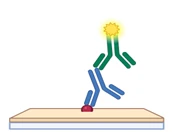
Microarray immunoassays are powerful tools for multiplexed detection of biomolecules. The principle is simple: antigens or antibodies are immobilised in tiny spots on a functionalised surface. When a sample flows across the chip, specific binding occurs. Detection is achieved through fluorescence, chemiluminescence, or other signal readouts, giving spatially resolved results.
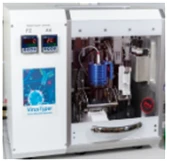
The MCR3 device is a modern platform that automates this process. It integrates microfluidics with microarrays, enabling precise flow control, reduced reagent use, and reproducible assays. Its modular design supports chemiluminescence-based microarray immunoassays, making it suitable for diverse applications.
Advantages include:
Multiplex detection in one run
Low sample and reagent consumption
High sensitivity and reproducibility
Automated handling for efficiency
Examples of use:
SARS-CoV‑2 antibody profiling and epitope mapping
Distinguishing infection- versus vaccine-induced antibodies
Detection of bacteria, viruses, and small molecules
Food safety testing (e.g., antibiotics in milk)
Together, microarray immunoassays with devices like MCR3 provide fast, sensitive, and versatile diagnostics.
Literature:
Klüpfel, J.; Paßreiter, S.; Rumpf, M.; Christa, C.; Holthoff, H.-P.; Ungerer, M.; Lohse, M; Knolle, P.; Protzer, U.; Elsner,M.; Seidel, M. Automated detection of neutralizing SARS-CoV-2 antibodies in minutes using a competitive chemiluminescence immunoassay. Analytical and Bioanalytical Chemistry 2023, 415, 391-404. DOI: 10.1007/s00216-022-04416-6
Neumair, J.; Kröger, M.; Stütz, E.; Jerin, C.; Chaker, A.M.; Schmidt-Weber, C.B.; Seidel, M. Flow-Based CL-SMIA for the Quantification of Protein Biomarkers from Nasal Secretions in Comparison with Sandwich ELISA. Biosensors 2023, 13(7), 670. DOI: 2079-6374/13/7/670
Neumair J.; Elsner M. and Seidel M.; Flow-based chemiluminescence microarrays as screening platform for affinity binders to capture and elute bacteria. Sensors 22(22), 8606. doi.org/10.3390/s22228606
Meyer V., Chatelle C., Weber W., Niessner R. and Seidel M.; Flow-based regenerable chemiluminescence receptor assay for the detection of tetracyclines. Analytical and Bioanalytical Chemitry 412 (2020) 3467-3476.
https://link.springer.com/article/10.1007/s00216-019-02368-y
Microarray-based Nucleic Acid Amplification Tests (NAATs):
Microarray-based nucleic acid amplification tests (NAATs) enable the sensitive and multiplexed detection of genetic material by combining nucleic acid amplification with high-throughput microarray hybridization. NAATs encompass a range of amplification strategies, including polymerase chain reaction (PCR), quantitative PCR (qPCR), and various isothermal amplification techniques such as recombinase polymerase amplification (RPA), loop-mediated isothermal amplification (LAMP), nucleic acid sequence–based amplification (NASBA), and rolling circle amplification (RCA). Isothermal methods are well suited for direct integration into microarray and lab-on-chip systems because they operate at a constant temperature, eliminating the need for thermal cycling and enabling miniaturized, field-deployable assays. Amplified nucleic acid fragments hybridize to specific oligonucleotide probes immobilized on the microarray surface, and detection is achieved through chemiluminescent or fluorescent signal generation. This design allows simultaneous and quantitative detection of multiple targets while reducing analysis time and sample handling. The heterogeneous asymmetric RPA is a DNA microarray-based method to amplify target DNA from bacteria and viruses in a multiplexed manner (Kunze et al., 2016). For Legionella spp. it was shown that viable and non-viable bacteria can be differentiated by an PMA-haRPA approach (Kober et al., 2018). The combination of concentration methods (CUF, MAF, and CeUF) was combined with haRPA for quantification of bacteriophage PhiX174 from 1-m3 drinking water samples.
Literature:
Elsäßer, D.; Ho, H.; Niessner, R.; Tiehm, A.; Seidel, M. Heterogeneous asymmetric recombinase polymerase amplification (haRPA) for rapid hygiene control of large-volume water samples. Analytical Biochemistry, 2018, 546, 58-64. doi.org/10.1016/j.ab.2018.01.032
Kober, C., Niessner, R., & Seidel, M. . Quantification of viable and non-viable Legionella spp. by heterogeneous asymmetric recombinase polymerase amplification (haRPA) on a flow-based chemiluminescence microarray. Biosensors and Bioelectronics, 2018, 100, 49–55. doi.org/10.1016/j.bios.2017.08.053
Kunze, A., Dilcher, M., Abd El Wahed, A., Hufert, F., Niessner, R., Seidel, M. On-chip isothermal nucleic acid amplification on flow-based chemiluminescence microarray analysis platform for the detection of viruses and bacteria. Analytical Chemistry, 2016, 88, 898–905.
https://pubmed.ncbi.nlm.nih.gov/26624222/