
Microanalytical Systems
Technologies and Methods
Superparamagnetic iron oxide nanoparticles (SPIONs):
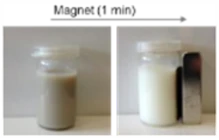
SPIONS are synthesized via inorganic methods and functionalized for selective magnetic separation in complex matrices.
Synthesis of SPIONs:
SPIONs are a subclass of magnetic nanoparticles (MNPs) characterized by their nanoscale size and superparamagnetic behavior, typically observed when particle diameters fall below ~10 nm. Their synthesis can be achieved through various inorganic strategies, each offering control over particle size, morphology, and magnetic properties:
Chemical co-precipitation: A widely used method involving the precipitation of iron salts (Fe²⁺/Fe³⁺) in alkaline media. It is simple and scalable but may yield polydisperse particles.
Thermal decomposition: Offers better control over particle uniformity and crystallinity by decomposing organometallic precursors at elevated temperatures in organic solvents.
Hydrothermal and solvothermal synthesis: These methods allow for high-pressure and temperature conditions, producing highly crystalline SPIONs.
Microemulsion and sol-gel techniques: Useful for tailoring particle size and surface characteristics.
These methods influence the magnetic saturation, coercivity, and colloidal stability of SPIONs, which are critical for (bio-) analytical and environmental applications. To enhance stability and enable targeted applications, SPIONs are typically coated with materials that provide functional groups:
Silanes (e.g., aminopropyltriethoxysilane): Form a robust silica shell around SPIONs, improving dispersibility in aqueous and organic solvents and introducing reactive groups like –NH₂ or –COOH.
Polymers (e.g., PEG, dextran): Increase biocompatibility and reduce non-specific interactions.
Applications in Magnetic Separation
SPIONS are coupled to Metal-organic frameworks (MOFs) and crown ethers to enable selective binding of ions or molecules due to their porous and chemically tunable structures.
Linkage to biological ligands (e.g., antibodies, DNA): Allow for specific recognition of biomolecules, making SPIONs suitable for (bio-) analytics.
Rapid and efficient isolation: Magnetic fields are used to separate SPION-bound analytes from bulk samples without filtration or centrifugation.
Selective concentration of analytes: SPIONs can bind specific targets in complex matrices such as blood, milk, or wastewater.
Environmental and food analysis or clinical diagnostics: SPIONs are employed to detect pathogens, toxins, or biomarkers with high sensitivity and specificity.
Magnetic separation is particularly valuable in scenarios where conventional separation methods are inefficient due to sample complexity or low analyte concentrations. Additionally, magnetic separation is solvent-free which is important regarding sustainability and green chemistry.
Literature:
Nistler, A.; Niessner, R., Seidel, M. Magnetic nanocomposites: versatile tool for the combination of immunomagnetic separation with flow-based chemiluminescence immunochip for rapid biosensing of staphylococcal enterotoxin B in milk. Analytical and Bioanalytical Chemistry, 2019, 411(19):4951-4961. DOI: 10.1007/s00216-019-01808-z
Nistler, A.; Hartmann, C.; Rümenapp, C.; Opel, M.; Gleich, B.; Niessner, R.; Seidel, M.; Production and characterization of long-term stable superparamagnetic iron oxide-shell silica-core nanocomposites. Journal of Magnetism and Magnetic Materials, 2017, 442, 497-503.
doi.org/10.1016/j.jmmm.2017.07.005
Rieger, M.; Schaumann, G.E.; Mouvenchery, Y.K.; Niessner, R.; Seidel, M.; Baumann, T., Development of antibody-labelled superparamagnetic nanoparticles for the visualisation of benzo[a]pyrene in porous media with magnetic resonance imaging. Analytical and Bioanalytical Chemistry, 2012, 403, 2529-2540. https://link.springer.com/article/10.1007/s00216-012-6044-1
Pappert, G.; Rieger, M.; Niessner, R., Seidel, M., Immunomagnetic nanoparticle-based sandwich chemiluminescence-ELISA for the enrichment and quantification of E. coli. Microchimica Acta, 2010, 168, 1-8.
https://link.springer.com/article/10.1007/s00604-009-0264-x.
Microfluidic Systems:
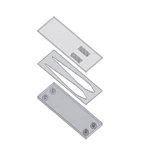
Microfluidic systems enhance analytical efficiency by reducing sample and reagent volumes, enabling rapid, miniaturized bioanalytical workflows without complex fabrication techniques. Microfluidic systems manipulate fluids in channels with dimensions typically ranging from tens to hundreds of micrometers. Importantly, microchannel fabrication can be achieved without traditional semiconductor lithography. A cost-effective alternative involves using double-sided adhesive tapes, which are cut and layered to form fluidic paths. This method enables rapid prototyping and customization of channel geometries, making microfluidics accessible for diverse laboratory applications.
Microfluidic platforms offer advantages in analytical science, including:
- Reduced reagent and significant advantages sample consumption, minimizing cost and waste.
- Accelerated reaction kinetics and analysis times due to enhanced surface-to-volume ratios.
Simplified instrumentation, allowing integration of multiple analytical steps into compact devices. Following bioanalytical techniques and instrumentation in our laboratory have implemented microfludic systems:
Flow-based chemiluminescence microarray analysis on the Microarray Chip Reader (MCR):
This system utilizes microfluidic flow to deliver automatically reagents across immobilized probes on a microarray chip surface. Highly sensitive chemiluminescent signals are generated and read in real-time, enabling rapid multianalyte detection by biomolecular interactions with minimal sample input.
Cartridge-based flow cytometry from rqmicro:
This platform combines immunomagnetic separation with microfluidic flow cytometry for the quantitative detection of Legionella pneumophila. Magnetic particles functionalized with antibodies selectively bind the target bacteria, which are then separated and quantified using optical detection in a microfluidic cartridge.
Microfluidic synthesis of magnetic nanoparticles coupled with miniaturized NMR:
A continuous-flow microreactor enables the controlled synthesis of magnetic nanoparticles. The integration with miniaturized nuclear magnetic resonance (NMR) allows online monitoring of relaxation properties, providing insights into particle size, surface chemistry, and magnetic behavior during synthesis.
Microfluidic systems are increasingly recognized for their role in:
- Point-of-care diagnostics: Compact and rapid testing platforms for diagnostics but also for rapid food and water analysis.
- Nanomaterial synthesis: Precise control over reaction conditions and product uniformity.
- Environmental monitoring: On-site detection of contaminants in water and air.
Literature:
Bemetz, J.; Wegemann, A.; Saatchi, K.; Haase, A.; Häfeli, U.O.; Niessner, R.; Gleich, B.; Seidel, M. Microfluidic-Based Synthesis of Magnetic Nanoparticles Coupled with Miniaturized NMR for Online Relaxation Studies. Analytical Chemistry, 2018, 90, 16, 9975-9982.
DOI:10.1021/acs.analchem.8b02374.
Seidel, M. and Niessner, R., Chemiluminescence microarrays: a critical review. Analytical and Bioanalytical Chemistry, 2014,406, 5589–5612. http://link.springer.com/article/10.1007/s00216-014-7968-4.
Streich, P.; Redwitz, J.; Walser-Reichenbach, S.; Herr, C.E.W.; Elsner, M.; Seidel, M. Culture-independent quantification of Legionella pneumophila in evaporative cooling systems using immunomagnetic separation coupled with flow cytometry. Applied Microbiology 2024, 4, 284-296. DOI: 10.3390/applmicrobiol4010019.
Wang, Y.; Seidel, M. Integration of 3D hydrodynamic focused microreactor with microfluidic chemiluminescence sensing for online synthesis and catalytical characterization of gold nanoparticles. Sensors, 2021, 21 (7), 2290.
https://www.mdpi.com/1424-8220/21/7/2290.
Wang, Y.; Rink, S.; Baeumner, A.J.; Seidel, M.; Microfluidic flow-injection aptamer-based chemiluminescence platform for sulfadimethoxine detection. Microchimica Acta, 2022, 189, 117. https://link.springer.com/article/10.1007/s00604-022-05216-6.
Surface Functionalization:

Surface modification is central to the performance of microarray chips and microfluidic systems, as it governs biomolecule immobilisation, signal quality, and assay reproducibility. Recent advances highlight the importance of tailoring surface chemistry to achieve
controlled orientation
density
and stability of immobilised ligands
For microarrays, functional coatings such as epoxides, aldehydes, and NHS-esters enable covalent attachment of proteins and nucleic acids, while polymer brushes and nanostructured films improve binding capacity and reduce nonspecific adsorption.
In microfluidic devices, surface modification strategies must balance biocompatibility with fluid dynamics; silanisation, PEGylation, and plasma treatments are widely applied to tune wettability and prevent fouling.
Antigen Immobilisation
Antigens must keep their natural shape for epitope recognition.
Methods: protein A/G for oriented binding, site-specific click chemistry, His-tag/Ni-NTA affinity.
Improves sensitivity in immunoassays.
Hapten Immobilisation
Haptens are small molecules, harder to immobilise directly.
Often linked to carrier proteins or attached via activated esters.
Linker chemistry and surface activation help maintain recognition while ensuring stability.
Bioconjugation Methods underpin these immobilisation strategies.
Classical methods:
EDC/NHS coupling (amide bonds)
Thiol–maleimide reactions
Diazonium chemistry
Modern bioorthogonal methods:
Azide–alkyne click chemistry
Strain-promoted cycloaddition
Advantages: high specificity, mild conditions, ideal for microfluidic biosensors.
Polymer coatings and supramolecular assemblies allow multiplexing of antigens, haptens, and nucleic acids.
Anti-Fouling: The Jeffamine ED 2003 solution
To achieve high sensitivity and accurate results by eliminating non-target molecule adsorption, which causes high background noise, it’s a critical goal to prevent unspecific binding. Jeffamine ED-2003 is a type of polyetheramine, structurally related to polyethylene glycol (PEG) and has a broad application in surface functionalization, e.g. of:
Microarray Chips: Both Glass and Polycarbonate (PC) substrates.
Magnetic Nanoparticles: Used in separation and detection.
MAF (Monolithic adsorption filtration)
Jeffamine's effectiveness stems from two primary characteristics:
Hydrophilic Shielding: It forms a highly hydrophilic layer due to its PEG backbone. This environment disfavors interactions with hydrophobic regions of proteins.
Steric Hindrance: The long, flexible chains create a dynamic "brush" that physically excludes (sterically hinders) large biomolecules from approaching and permanently sticking to the surface.
Together, these innovations in surface modification and bioconjugation expand the analytical capabilities of microarrays and microfluidic systems, enabling sensitive detection of diverse biomolecules from proteins to small haptens. The cited studies demonstrate that careful design of immobilisation chemistry is essential for advancing diagnostic and bioanalytical technologies.
Literature:
Klüpfel, J., Koros, R.C., Dehne, K. et al. Automated, flow-based chemiluminescence microarray immunoassay for the rapid multiplex detection of IgG antibodies to SARS-CoV-2 in human serum and plasma (CoVRapid CL-MIA). Anal Bioanal Chem 413, 5619–5632 (2021).
https://doi.org/10.1007/s00216-021-03315-6
Klüpfel J.; Paßreiter S.; Weidlein N.; Knopp M.; Ungerer M.; Protzer U.; Knolle P.; Hayden O.; Elsner M.; Seidel M.; Fully automated chemiluminescence microarray analysis platform for rapid and multiplexed SARS-CoV-2 serodiagnostics. Analytical Chemistry, 2022, 94,2855–2864. doi.org/10.1021/acs.analchem.1c04672
Kloth, K., Rye-Johnsen, M., Didier, A., Dietrich, R., Märtlbauer, E., Niessner, R., Seidel, M., A Regenerable Immunochip for the Rapid Determination of 13 Different Antibiotics in Raw Milk, Analyst, 2009,134, 1433-1439.
https://pubs.rsc.org/en/content/articlelanding/2009/an/b817836d
Wolter A, Niessner R, Seidel M. Preparation and characterization of functional poly(ethylene glycol) surfaces for the use of antibody microarrays. Anal Chem. 2007;79(12):4529–37. https://pubs.acs.org/doi/full/10.1021/ac070243a
Bemetz, J.; Kober, C.; Meyer, V. K.; Niessner, R.; Seidel, M., Succinylated Jeffamine ED-2003 coated polycarbonate chips for low-cost analytical microarrays. Analytical and Bioanalytical Chemistry 2019,411, (10), 1943-1955.
https://doi.org/10.1007/s00216-019-01594-8